Howe, Indiana: A Town Built on Legacy and Community
A delivery route turned sightseeing trip to Howe, Indiana, uncovers a historic military school campus and a bookstore with a big-hearted mission.
As I get older, and maybe it is simply a result of age, I have become more and more interested in history. But more than that, I am interested in stories of times long forgotten or lost to time. I have always been interested in the Lost Colony of Roanoke, for instance. This is not a story of a forgotten piece of history, though, but rather one newly discovered for me.
During the summer of 2025, after a six-month bout with unemployment, I worked for FedEx as a delivery driver for roughly two months. I had several routes because I was new and was used as a sort of floater, filling in gaps for people who had days off. This style of employment was nothing new to me — I have always tried to learn as much as I can so I can fill in wherever I’m needed. There was one route that was a mixed bag for me, though: the Howe route. I have lived in Indiana my entire life, and I had never heard of, driven through, or been in Howe, Indiana. It was a completely new town to me. Due to my inexperience, I didn’t much enjoy the route, because it took an hour to get there and an hour to get back to the DC (distribution center), which always meant long days. One thing that struck me on the route, though, was the Great Commission University campus. It was a collection of buildings with architecture unlike anything else in the area and felt completely out of place. But it fascinated me, because at first glance I couldn’t quite tell if it was decommissioned or still an active school.
With my plans to move to Tennessee, I have started making a list of places in Indiana I either want to revisit or visit for the first time. It’s not that I will never return to Indiana at all, but visiting these more obscure towns and cities will become less of a priority compared to visiting family. So, in a way, I have constructed a sightseeing bucket list — not in the conventional sense, but more like a bucket list for this chapter of my life. On that list was, of course, Howe, Indiana. I have fortunately had the time, between all of my obligations and projects, to go visit and spend more time there than I did during my delivery days.
Early History
I would like to preface this by saying I am not a historian by any standard or metric. I am simply a person who finds historical things fascinating and worth preserving.
Modern-day Howe has very humble beginnings, but a very interesting story. Driving and walking through the town, you probably wouldn’t know it. But it is filled with history, community, and potential.
Originally named “Mongoquinong” by the Potawatomi people, it was settled by white settlers in 1828.1 In 1833 or 1834, Mongoquinong was renamed Lima by an act of the State Legislature.1 Lima was the LaGrange County seat from 1833 to 1844.1
It was eventually renamed Howe in honor of John Badlam Howe, a lawyer from Boston. He moved to the Lima area in 1833 because it sat between the Pigeon River and Fawn River.1 John B. Howe was born in Boston in 1813 to Rev. James B. Howe. He graduated from Trinity College in Hartford, Connecticut, and at 21 became the first lawyer admitted to the LaGrange County Bar. In 1840 he represented Steuben, Noble, DeKalb, and LaGrange County in the State Legislature, and in 1850 he was part of the Indiana State Constitutional Convention.
All this to say, he lived a vibrant life and pursued noble work in many spheres. He was the area’s first lawyer, teacher, and banker, as well as a politician and the founder of Howe School. His impact eventually led to the renaming of Lima to Howe in 1909.1
Great Commission University
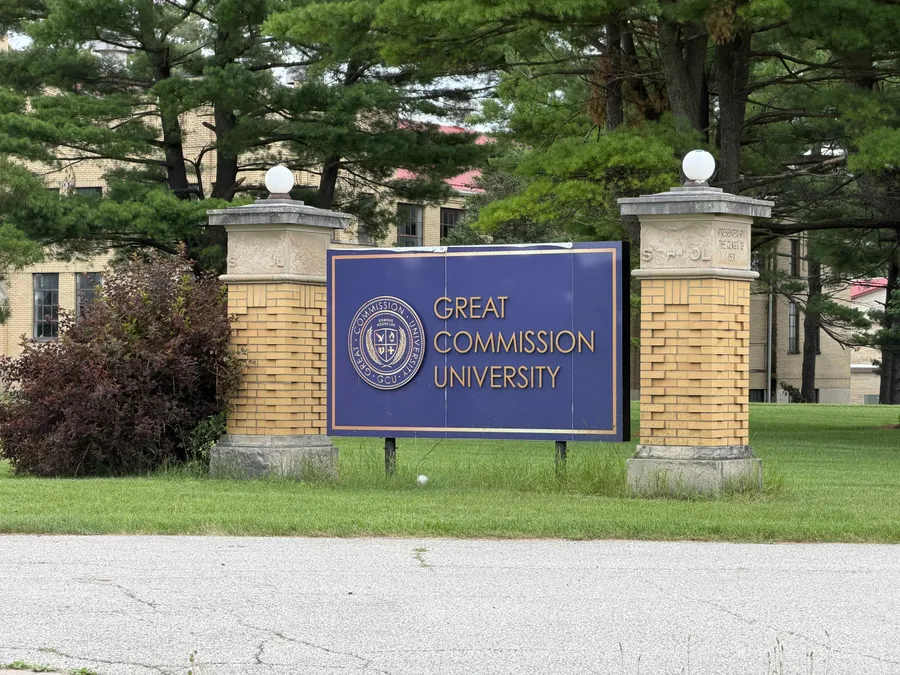
This was the first thing that really caught my eye about Howe. On my route, I was driving down State Road 9 when I passed a collection of really old, very ornate structures. Given how small the town was, it caught me off guard, and I had to do a double take. Since I was on a schedule, I didn’t get a chance to stop or take a closer look, so I hoped my route would take me back through so I could learn the name of this mysterious set of buildings. As fortune would have it, I did pass by in the opposite direction, which gave me the chance to see the sign with the name: Great Commission University.
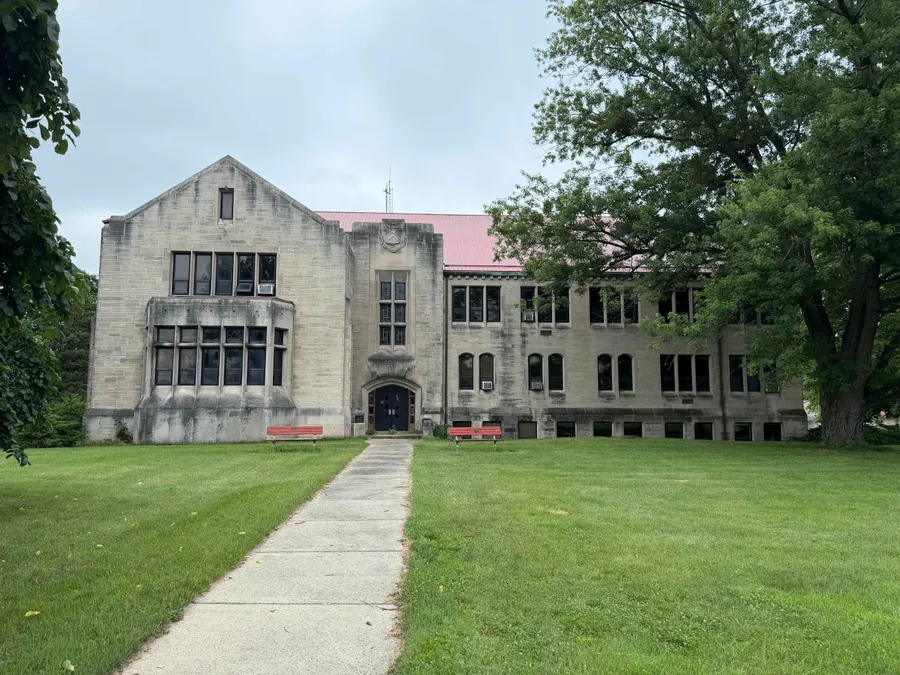
The campus was originally founded as Howe Grammar School in 1884. A short while later, in 1895, it was converted to Howe Military School by Rev. John Heyward McKenzie, the school’s second rector.2 During McKenzie’s tenure, he expanded enrollment, constructed numerous buildings on campus, made military discipline a central part of student life, and built the school a national reputation. His influence could still be felt well after his death in 1920.
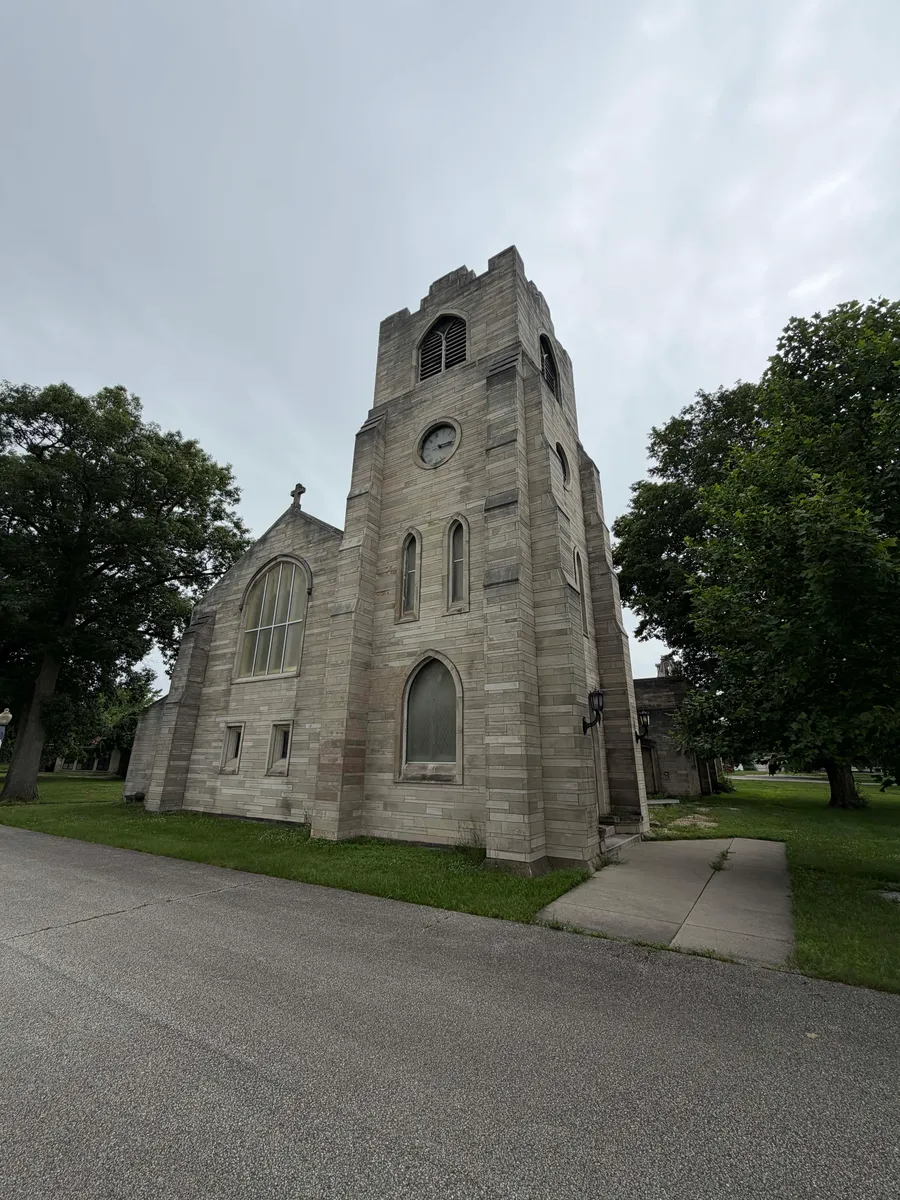
In 1902, during his time as rector, McKenzie commissioned the St. James Memorial Chapel. It’s something of a crown jewel of the campus, having served generations of cadets for worship and various ceremonies. It was officially added to the National Register of Historic Places on August 16, 2001.3 The chapel was originally built in a Tudor Revival style, then updated in 1955 with a limestone veneer to match the other buildings on campus. It also holds the crypts of John B. Howe and his wife, Frances.
In 1934, the school had its first lay (non-clergy) head, Burrett B. Bouton. During Bouton’s tenure, the school faced two major challenges: maintaining enrollment through the Great Depression, and Howe’s great fire in 1946, when the old academic building burned down. At its height, the school drew students from all over the United States, as well as Europe, Asia, and South America. During the 1966-1967 school year, it taught and housed 458 students.2 Unfortunately, by 1979 enrollment had dropped to 248, and it kept falling — to below 100 during the anti-war years.
As of September 2008, Howe was one of 28 military prep schools remaining in the United States, down from a high of 125. Between declining enrollment, rising maintenance costs, aging facilities, and operating at a deficit, the school officially closed its doors in March 2019. It was then bought by World Olivet Assembly in 2020, which announced plans to establish Great Commission University.2
Ark Paws & Claws Book Store
While walking around “downtown” Howe, another sign caught my eye: the sign for Ark Paws & Claws Book Store. Admittedly, at first glance I hadn’t caught the name — the sign was interesting because it used pictography of a book and a paw print. Given my current project, Lend-A-Book, that obviously caught my interest. After my walk to Great Commission University, I decided to visit the bookstore, and it exceeded whatever expectations I’d formed when I first saw the sign.
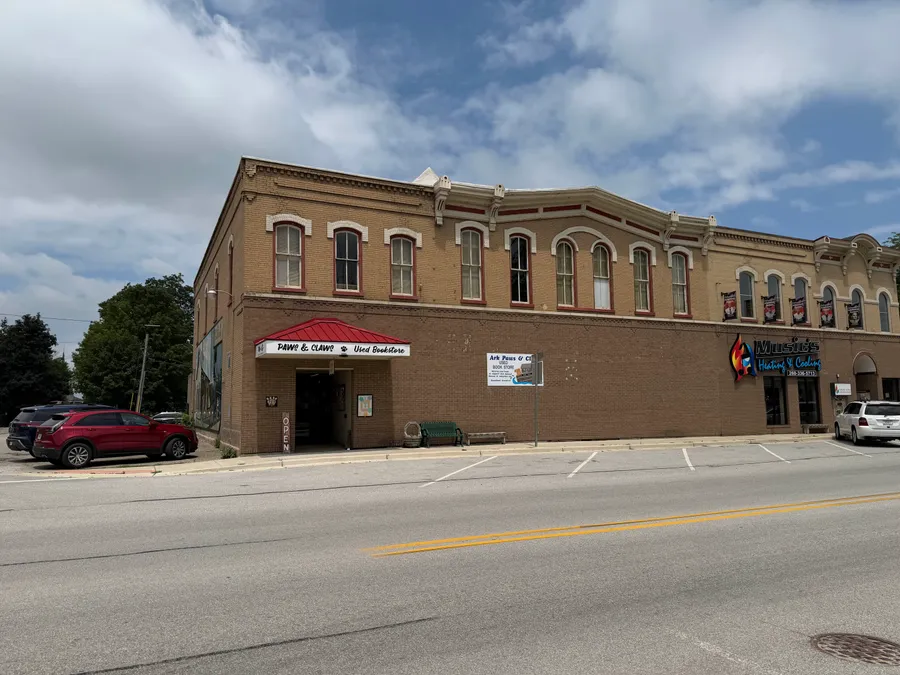
From the exterior, the location looked modest, and I suppose in its own way it was. But once you step inside, you’re welcomed by several long, narrow aisles filled with books. Beyond what the store offers, though, the cause it supports is far greater.
While browsing, I came across a section of old books — antiques, really. I was struck by the volume and uniqueness of what they had on offer. But when I asked about pricing, I was truly stunned. Most books ranged between 50 cents and $2. Some were priced as high as $20, and others were simply by donation.
I spoke with a couple of the volunteers and learned that the bookstore exists to fund the ARK Animal Rescue and Adoption. Most of the staff are volunteers, many of them retired teachers. I asked a number of questions about the store’s origins and its founder, and after I got home, I looked into it further.
ARK Animal Rescue and Adoption was founded in July 2006, and the Ark Paws & Claws Book Store came with it. From what the volunteers told me, the store has moved locations several times over the years. Its current home was previously a local grocery store, and the back room — once a walk-in freezer — is now additional book storage.
Purchases at the store help fund the animal rescue’s food and veterinary care, along with its broader rescue and adoption efforts.
The founding of both the animal rescue and the bookstore is largely credited to Margaret “Marge” Malone. In my research, I learned a fair bit about Mrs. Malone, and to say she has a heart of gold would be an understatement. Much like John B. Howe shaped Lima, Marge has had a massive impact on Howe. She was named Howe’s Nonprofit Woman of the Year in 2020.4
In 2015, Marge read the article The Hidden Face of Meth and decided to act. She gathered a group of county officials, church leaders, foster parents, and other concerned citizens — along with mental health counselors and child services advocates — and formed The Farm. Through various fundraising efforts, they collected enough money to purchase 10 acres on SR 9 north of LaGrange, where they built a 3,500-square-foot residence that became a licensed foster family home. “Since 2020, the first year the home was occupied, more than 40 children have passed through its doors.”5
Impact
I find the story of Howe fascinating: two charitable, influential people from two different eras, both doing amazing things. From what I observed, I’d say both of them have or had a real heart for people and for serving their community. It amazes me that a town with a population of just 610 people, as of the 2020 census, could hold such large personalities. Driving through it on a delivery route, I would never have guessed.
I’m thankful both for having had that route and for the chance to go back and walk the streets of Howe. It gave me the opportunity to learn a bit about the history of a town I would never have known existed if not for my work with FedEx.
I think it’s always in the most unexpected ways that we find the most interesting things. Something about walking those streets, where two giants of kindness once walked and continue to walk in spirit, has had a real impact on me. It’s remarkable that a bit of unique architecture caught my attention enough to lead me to learn all of this.
I’ll leave you with two last things. First, if you’d like an interesting read about Howe and Marge, check out this article: South County News. Second, go explore somewhere new. Drive in a new direction until something catches your eye — a town, a shop, or something out in nature. Just explore. You never truly know what gems you’ll dig up, or how much it can fill your soul, until you give it a try.